

I have been a camp counselor at Sikh and Indian cultural camps for most of my adult life. Day camps. Overnight camps. Weekend programs where 30 to 50 kids show up and you spend three days managing a chaotic, beautiful intersection of culture, community, identity, and very normal 10-year-old chaos.
I love it. I have always loved it. And for most of that time, it was also one of the most quietly stressful things I did all year.
Not because of the programming. Not because of the kids, who are unfailingly funny and occasionally infuriating in the way that only kids between 10 and 13 can be. The stress came from something harder to name: the accumulating weight of things I could not control.
Part of that awareness started long before camp. I have two cousins with life-threatening allergies — to nuts, eggs, and a range of other common allergens that show up in the most ordinary foods without warning. Growing up around them meant growing up understanding, in a very concrete way, that allergens do not announce themselves. That a reaction does not give you a warning shot. That the margin between a close call and a tragedy is thinner than most people want to believe. I watched the adults around them navigate that reality constantly — the food checks, the restaurant calls, the quiet scan of every room before relaxing. When I started working with kids at camp, I carried that awareness with me. It was the reason I never thought of food allergy management as someone else’s problem.
What nobody tells you before you take on a group of kids
I want to be clear about who this is written for. Not the camp nurse. Not the medical director. This is written for the people who are actually with your campers for most of the day: the counselors, the group leads, the volunteers who signed up because they care about the community and ended up responsible for 12 kids they met 48 hours ago. The people with a walkie-talkie and a schedule, not a medical credential.
When a parent drops their child off at camp, they are handing you something irreplaceable. Not metaphorically. Their actual child. The person they think about first when they wake up and last before they fall asleep. For however long the program runs, that person is yours.
So you plan. You run through the schedule. You know which cabin has the kids most likely to sneak out at night, whose parents were anxious at drop-off, how the social dynamics of this particular group are likely to play out. You are running a dozen mental calculations at once, and you have not even started the opening ceremony.
Now add a camper with a severe peanut allergy.
The part of food allergy management nobody talks about
The conventional framing is simple: make sure the kid with the allergy does not eat the allergen. Control the menu. Talk to the kitchen. Put a note in the file.
If you have spent any real time with a group of 10-year-olds, you know how inadequate that is.
The risk is not just what the allergic kid eats. It is everything happening around that kid. It is the well-meaning friend who shares a granola bar without reading the label. It is the child who does not fully understand the severity and decides, in the way that kids sometimes do, to use a peanut butter sandwich as a prop in a joke. It is the bee that flies into the dining tent during lunch. It is the snack someone smuggled into the overnight cabin that nobody told you about.
I cannot watch every interaction. I cannot search every bag. I cannot undo the decision a 10-year-old makes in two seconds while my attention is somewhere else, which is somewhere else every few minutes, because I have 14 other kids who also need me.
This is the actual mental load of camp counseling with an at-risk child in your group. It is not one problem. It is a scenario you cannot fully control, running in the background of everything else you are responsible for.
The fire extinguisher in the room
Here is the analogy that clicked for me when I started working with Belay.
When there is a fire extinguisher mounted on the wall, the chances of a fire do not go down. The risk is exactly the same. What changes is my relationship to that risk. I know where it is. I know how to use it. I know that if the worst happens, I have a response plan rather than a helpless moment. That knowledge settles somewhere quiet. And because it is settled, my brain stops poking at it.
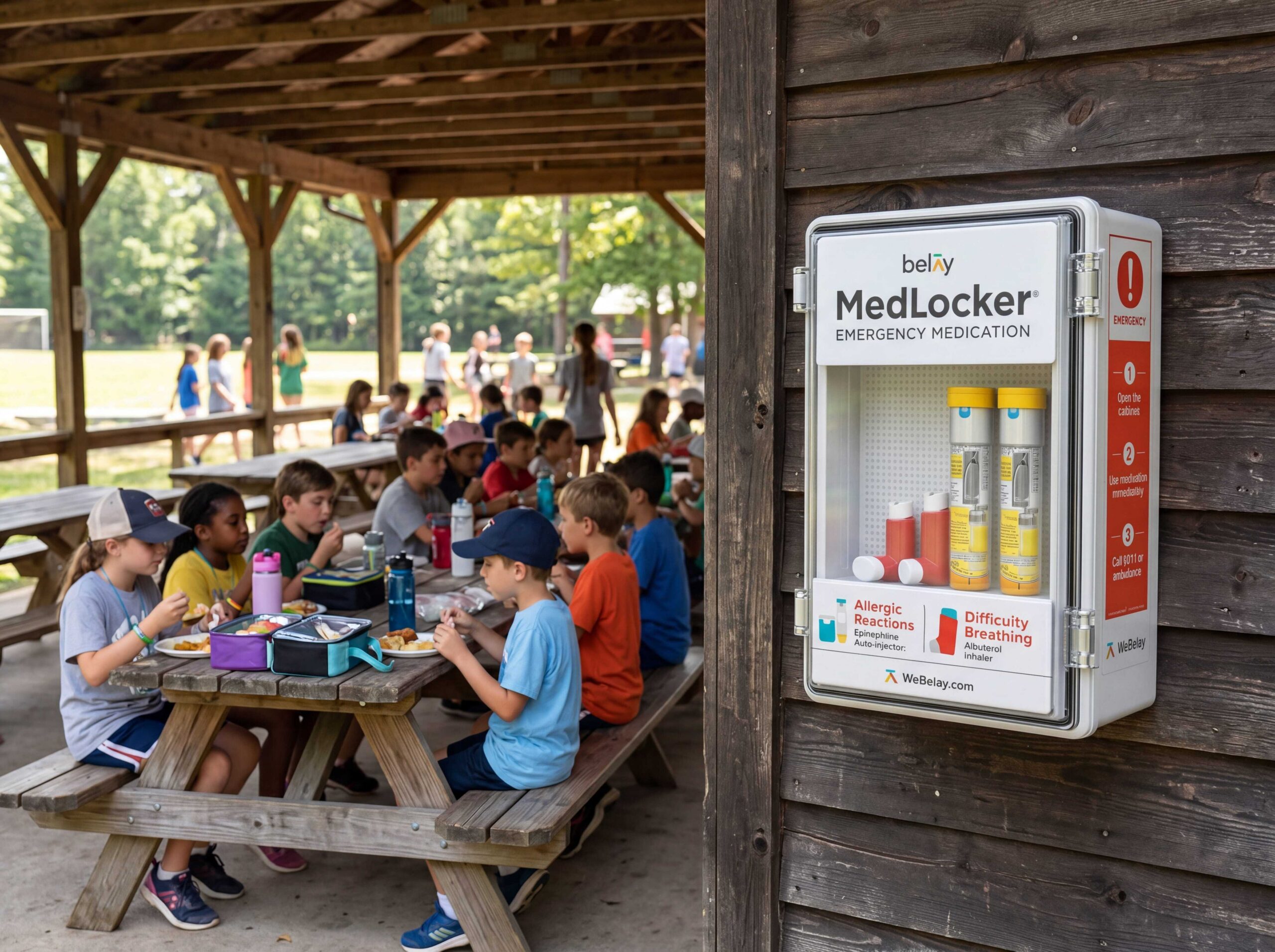
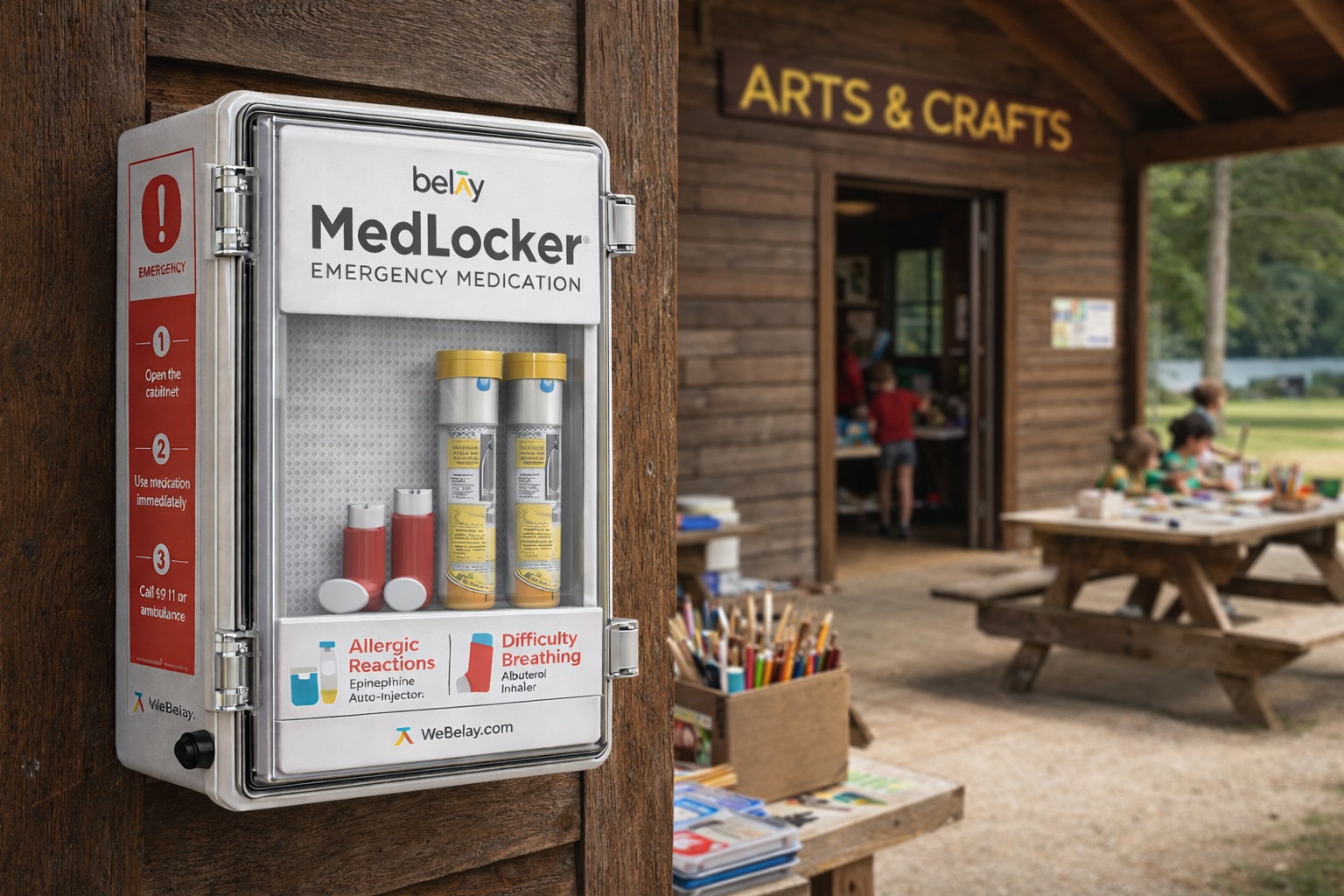
That is what having a MedLocker on site, trained counselors, and a clear protocol actually does for a camp volunteer. The probability of a reaction does not go down. What changes is that I am no longer carrying the unanswerable question: what would I actually do?
When I know the answer — when I have practiced the steps, when I know exactly where the medication is, when I can recognize the signs and respond with confidence — a specific kind of anxiety disappears. Not the vigilance you are supposed to carry. Just the helplessness underneath it.
Mental energy is finite. Every unit I spend on “what if something happens and I have no idea what to do” is a unit I am not spending on the kid who is struggling in the afternoon session, or noticing that the group dynamic has shifted and someone needs to talk, or just being present. Which is, when you get down to it, the most important thing a camp counselor can offer.
The thing camps owe their volunteers
I help an emergency medication infrastructure company now, which gives me a particular perspective on this. But the argument here is not a product argument. It is a human one.
Every volunteer who takes responsibility for a group of children deserves to know the institution behind them has their back. That the worst-case scenario has been thought through. That there is a response plan, it is accessible, and they have been equipped to execute it.
Most camps do not provide that. The volunteer shows up, gets a name tag and a schedule, and is left to figure out the rest. That is not good enough for the kids. And it is not good enough for the people giving their weekends to show up for them.
The fire extinguisher is not just a safety device. It is a statement that someone thought this through. That if something goes wrong, you will not be standing there alone.
Every camp program and every overnight where a parent trusts you with their child deserves that statement on the wall.