
When camp directors think about food allergy safety, the conversation frequently starts in the dining hall. What is on the menu, are there seating areas free from particular allergens, does the kitchen understand cross-contact?. These are not inappropriate questions, but they are incomplete. The gap that leads to bad outcomes is frequently not the kitchen. It is the counselor who does not know what anaphylaxis looks like, who has never held an epinephrine device, and who started working at camp three weeks after orientation ended.
The hidden allergy risk at summer camps is training and preparedness of staff. More specifically, it is what happens to your safety plan when your staff turns over.
Camp counselor turnover runs between 30 and 35 percent annually, and 80 percent of camp staff are between 18 and 25 years old. The American Camp Association has identified staff retention as the second-highest emerging issue among camp professionals. This is a known feature of the industry, and camps plan for it everywhere except, too often, in emergency medical preparedness.
A national survey of camp leadership found that nearly one in three directors were not confident in their staff’s ability to manage an anaphylaxis emergency. More than fifteen percent were actively dissatisfied with their training materials. The same research showed that dedicated training meaningfully improves staff confidence — but even post-training, the majority of staff remained uncertain. And that uncertainty resets every summer.
Training that lives in someone’s head walks out the door every August.
In nearly two decades of experience, I have seen this failure across many types of institutions. A nurse who knew every camper’s situation by heart, a director who had handled every prior incident personally, a counselor experienced enough that everyone else deferred to her. And then that person left, and the plan evaporated.
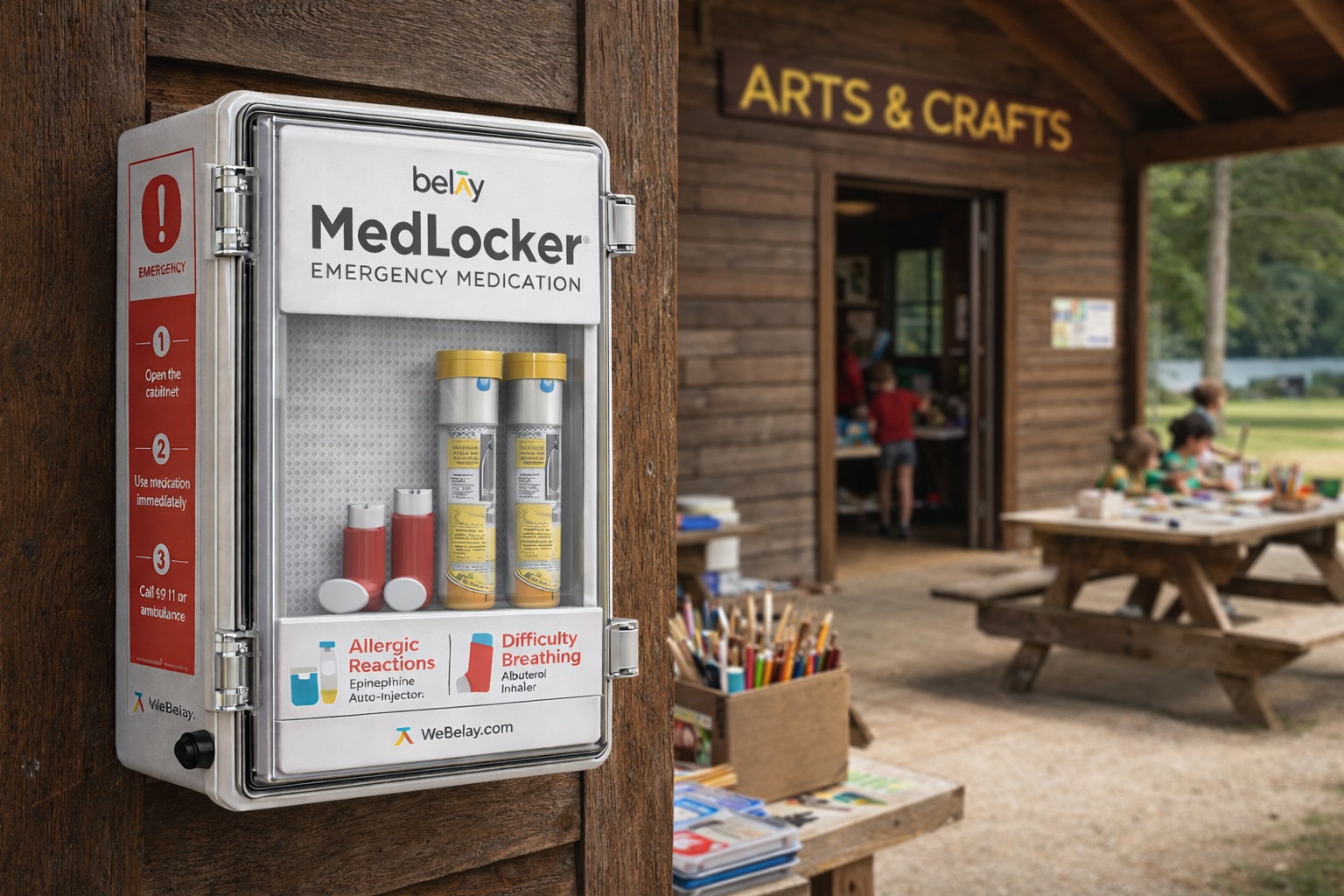
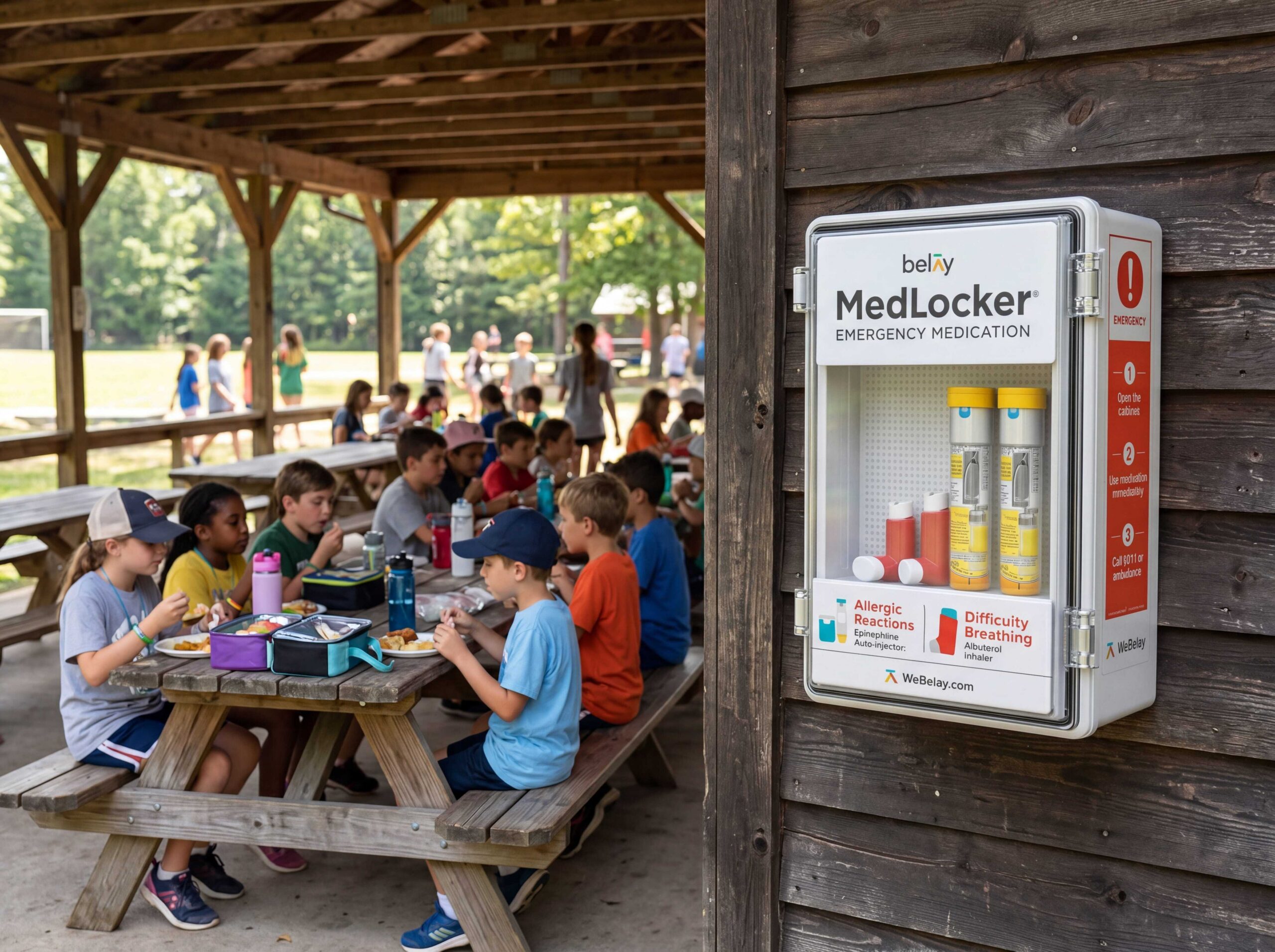
The solution is not more training. It is coupling training with a protocol that doesn’t just live inside people’s heads but in the environment itself. Signage at every location where a reaction could occur. Emergency medication placed where campers actually spend time — the mess hall, the sports field, the overnight cabins — not centralized in a nurse’s office that may be a 10-minute walk from the waterfront. Procedures posted and visible, not just covered in a session that half the current staff did not attend.
This is precisely how camps approach water safety. No one relies on a counselor’s memory of drowning prevention. The protocol is embedded in the environment: lifeguards, posted rules, buddy systems, physical barriers.Food allergy emergency preparedness deserves the same structural thinking. The question for camp directors is not whether you trained your staff this summer. It is whether your protocol could be followed correctly by someone who missed orientation. If the answer is no, your safety infrastructure is one resignation letter away from a critical gap.
More than thirty states have passed laws indemnifying camps if they choose to stock epinephrine and use it in the event of an emergency, with other states following suit. But what happens if your staff does not act? This is a risk not worth taking.