
Could somebody who has never been in your building find the naloxone in the first few minutes, without hunting down a staff member or a key?
Sam has made the case that this reaches buildings whose administrators are certain it doesn’t. Take that as settled and a second question opens immediately, and it’s a physical one. If it happens in your building, can the person standing there actually get to the naloxone?
The phrase that governs this turns up in statute after statute. Emergency medication is to be kept in a secure but unlocked location. It’s a good phrase, and it’s doing a lot of work for four words, because it names a real tension without resolving it. Secure means nobody walks off with it. Unlocked means it’s available to whoever happens to be standing there. Every building resolves that differently, and how you resolve it is an architectural decision, not an administrative one.
I design buildings for a living. So when I read that phrase I’m not thinking about the compliance file. I’m picturing somebody moving through a space under stress, and asking whether the building is helping them or getting in their way.
One Question
Here’s the test I use. Could somebody who has never set foot in your building find the naloxone in the first few minutes, without having to locate a staff member or a key?
Not the school nurse. Not facilities. A substitute teacher. A visiting coach. A parent volunteer. Somebody who walked in off the street twenty minutes ago. If the honest answer is no, then the medication is in the building but it isn’t accessible in any way that matters during an emergency, whatever the paperwork says.
Most organizations fail this test the same way. The medication is real, the intent is good, and it’s in a drawer, in an office, that locks at three o’clock, behind a person who has to be found first.
A School, and a Library
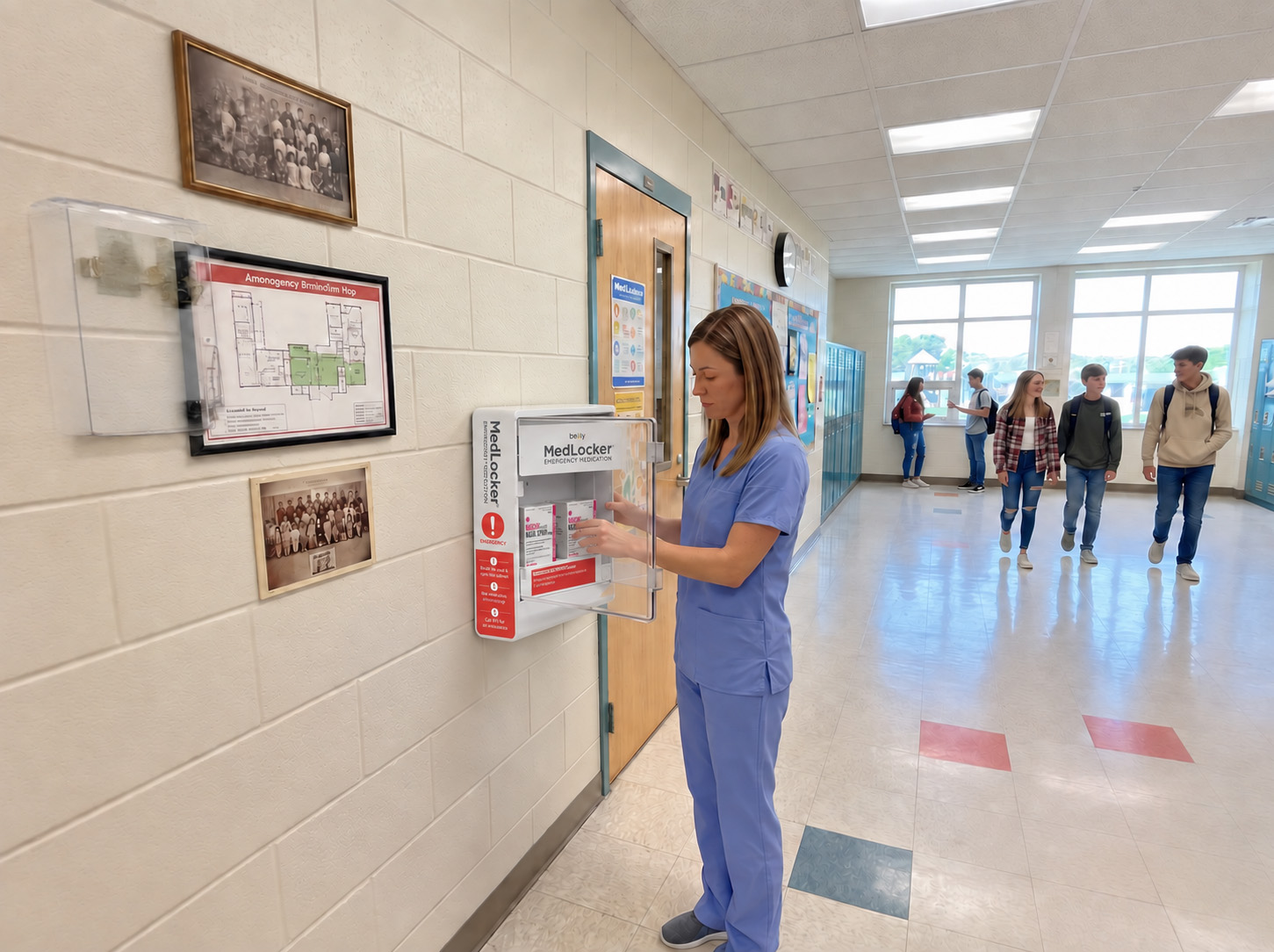
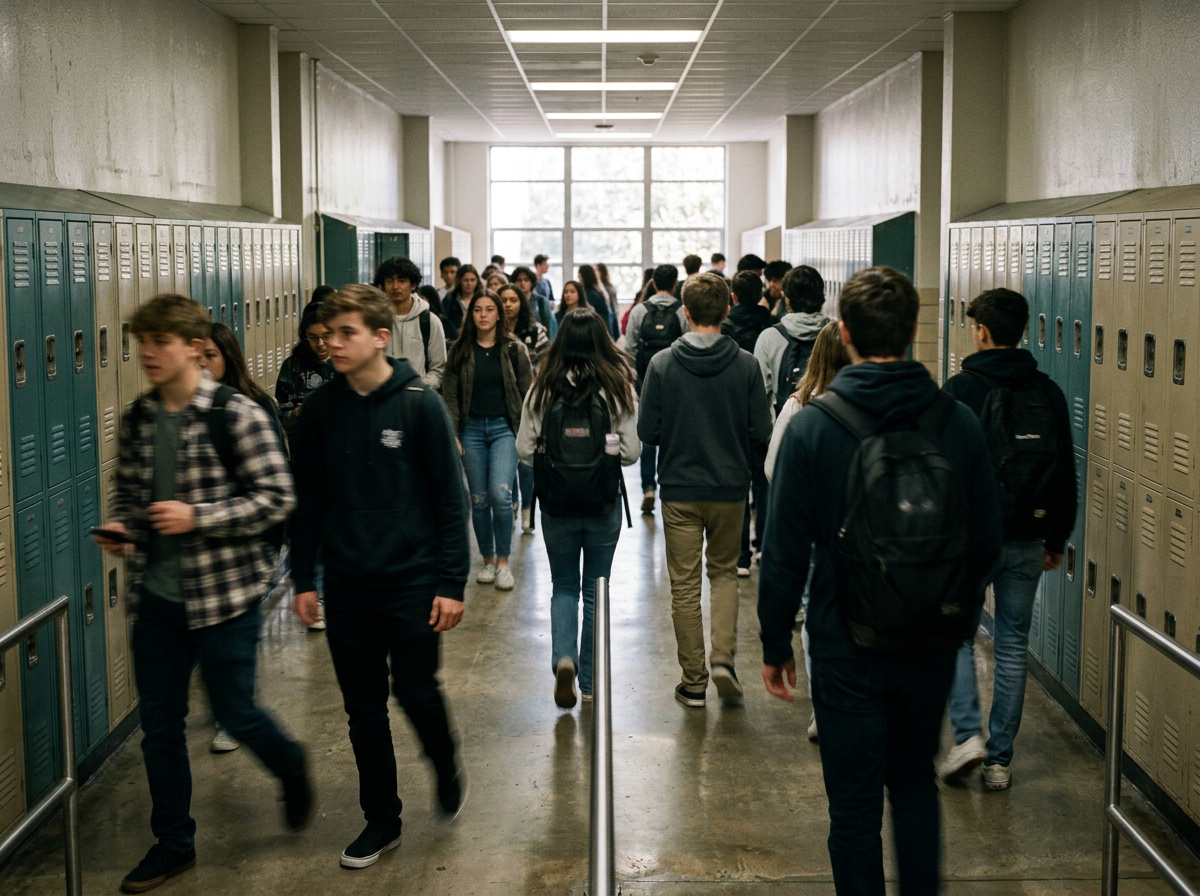
In a school the reflex is the nurse’s office. Right instinct, wrong room. The nurse’s office is where medication lives, which is exactly what makes it a poor home for the one item that has to be reachable when the nurse isn’t there. Usually the better answer is the corridor wall right outside that office. Same association in everyone’s head, same line of sight for supervision, no door between the emergency and the response.
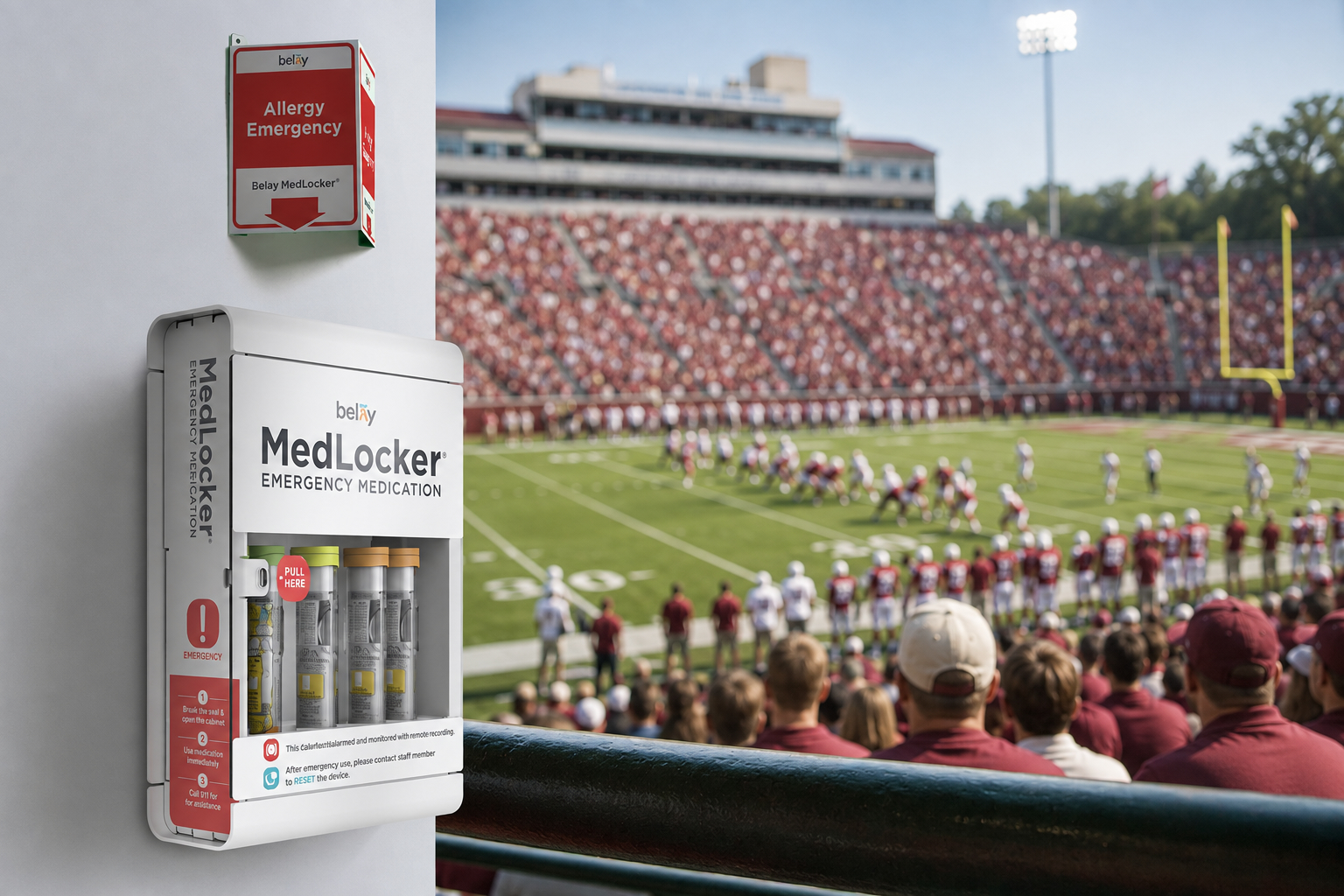
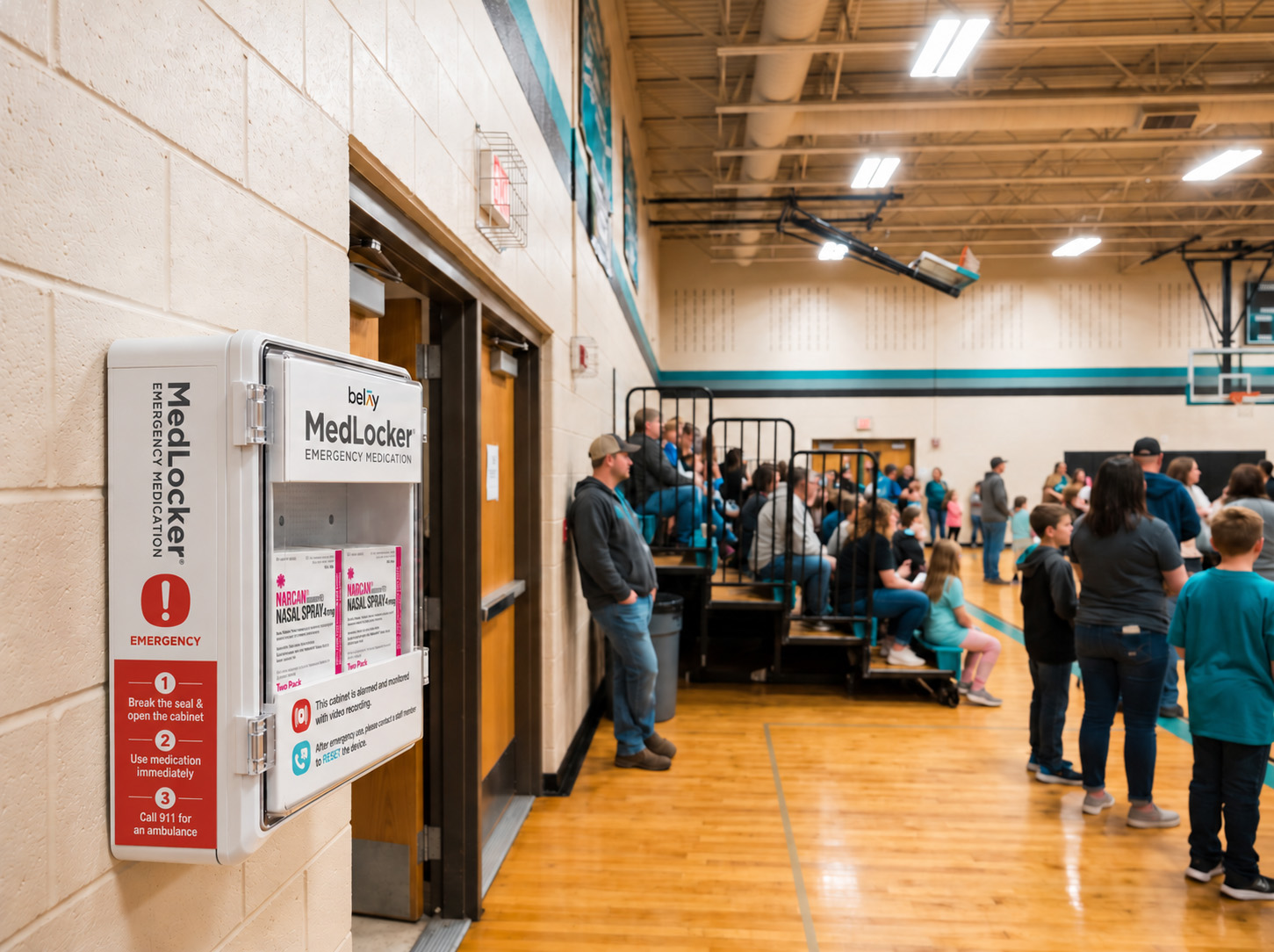
Then the second question, which most schools haven’t gotten to yet: what about the gym, the fields, and the auditorium on a Saturday, when the main building is locked and four hundred people are on site?
Libraries are a cleaner problem, and since January an urgent one in Illinois, where public libraries are now required to stock opioid reversal agents. A library has no nurse and no clinical staff, and it’s a building type whose entire purpose is that strangers walk in without explaining themselves. Restrooms are the location staff worry about. The circulation desk is staffed but not always occupied. In most library plans the workable answer is a visible station within sight of the main desk, and a second one near the restroom corridor, both reachable without asking anyone’s permission.
Illinois libraries aren’t figuring this out from scratch, and that’s largely down to Live4Lali, which has been building naloxone access and training across the Chicago suburbs since 2009. They’re a big part of why the medication is available and why library staff in that region have somewhere to turn for training. The building still has to do its part.
Put It Where the AED Already Is
Most institutions solved this exact problem once, and then forgot they’d done it.
Your AED isn’t in a locked office. It’s on a wall at a height anyone can reach, behind glass or an unlocked door, signed so it’s visible from a distance, sited for response time rather than for tidiness. Nobody has to be told where it is, because the building tells them.
That’s the standard. Putting emergency medication with the AED is the highest-value placement decision available to most organizations and it costs close to nothing. It borrows a wayfinding system your occupants already understand, it puts both interventions in one place for a responder who might need either, and it turns “where should this go” into “where does this already go.”
Signage follows from the same logic. It has to be readable from the far end of the corridor, not from arm’s length, and the wall itself should say what’s inside. A stranger won’t open an unmarked cabinet in the middle of somebody else’s emergency.
The First Few Minutes
Placement earns its value in a narrow window. If someone is unresponsive and not breathing normally: call 911, give the naloxone, stay with them, and give a second dose if there’s no response. Two things are worth saying plainly, because not knowing them is what stops bystanders from acting. Naloxone won’t harm someone who isn’t overdosing. And incidental contact with fentanyl doesn’t poison a responder.
The building’s job is to make sure none of that gets delayed by a search.
What to Do This Month
Walk your building the way a stranger would. Come in the main door and try to find the naloxone without asking anybody. Do it again after hours. Then do it at the satellite site you rent, or use twice a year, or forgot you had. Wherever you had to ask somebody, that’s the work.
Fix all of it and you’ve solved access for one afternoon. Whether it’s still solved next spring is a different problem, and it’s the one Eric takes up next.