
Fewer teens are using drugs. More are dying. What changed, and what it means for the places where they gather.
There are two groups of people who need naloxone. The first is people living with opioid addiction. The second is teenagers who experiment once, with a pill they believe is something else. Both matter. But in the places Belay serves, schools, universities, camps, and public venues, it is overwhelmingly the second group who will need it, and that distinction should change how administrators think about stocking it.
Fentanyl is a synthetic opioid 50 to 100 times more potent than morphine. Because it is inexpensive to produce, it is now pressed into counterfeit pills sold as Xanax, Percocet, and Adderall, and sold through the same social platforms teenagers already use. A pill that looks exactly like a prescription medication may contain a lethal dose, which for fentanyl is roughly 2 milligrams, smaller than a grain of salt.[5]
The Numbers Tell a Story That Sounds Contradictory
Fewer American teenagers are using drugs than at almost any point in recent memory. Illicit drug use among high school students fell to 10% in 2023, down from 13% in 2017.[2] Alcohol use fell over the same period. By every measure of behavior, this generation is more cautious than the one before it.
And yet adolescent overdose deaths remain more than double what they were before the pandemic: 708 deaths in 2023, compared with 282 in 2019.[1] Fentanyl was involved in 76% of them.[7]
Those two facts only look contradictory until you understand what changed. It is not that more teenagers are taking drugs. It is that the drug supply became lethal. A single experiment that a previous generation survived is now, with meaningful frequency, fatal.
There is genuine good news in the most recent data. Adolescent overdose deaths fell slightly in 2023, the first decrease in years, and the rise in fentanyl deaths slowed to its smallest annual increase since the pandemic began.[7] The trend is bending. But a trend bending is not the same as a risk ending, and it is not an argument for a building being unprepared.
Why This Reaches Institutions That Do Not Think It Applies to Them
The most common response I hear from administrators is some version of “we don’t have a drug problem here.” That may well be true, and it is beside the point. The exposure is not a population with a habit. It is one student, one time, with one pill purchased from an account that looked legitimate.
Counterfeit pills are convincing enough that visual identification is unreliable, which means no amount of student judgment reliably protects against them.[4] And because the teenagers most at risk are not the ones anybody has flagged, no watch list helps either. This is precisely the profile of risk that infrastructure addresses and vigilance does not.
What Institutions Are Doing
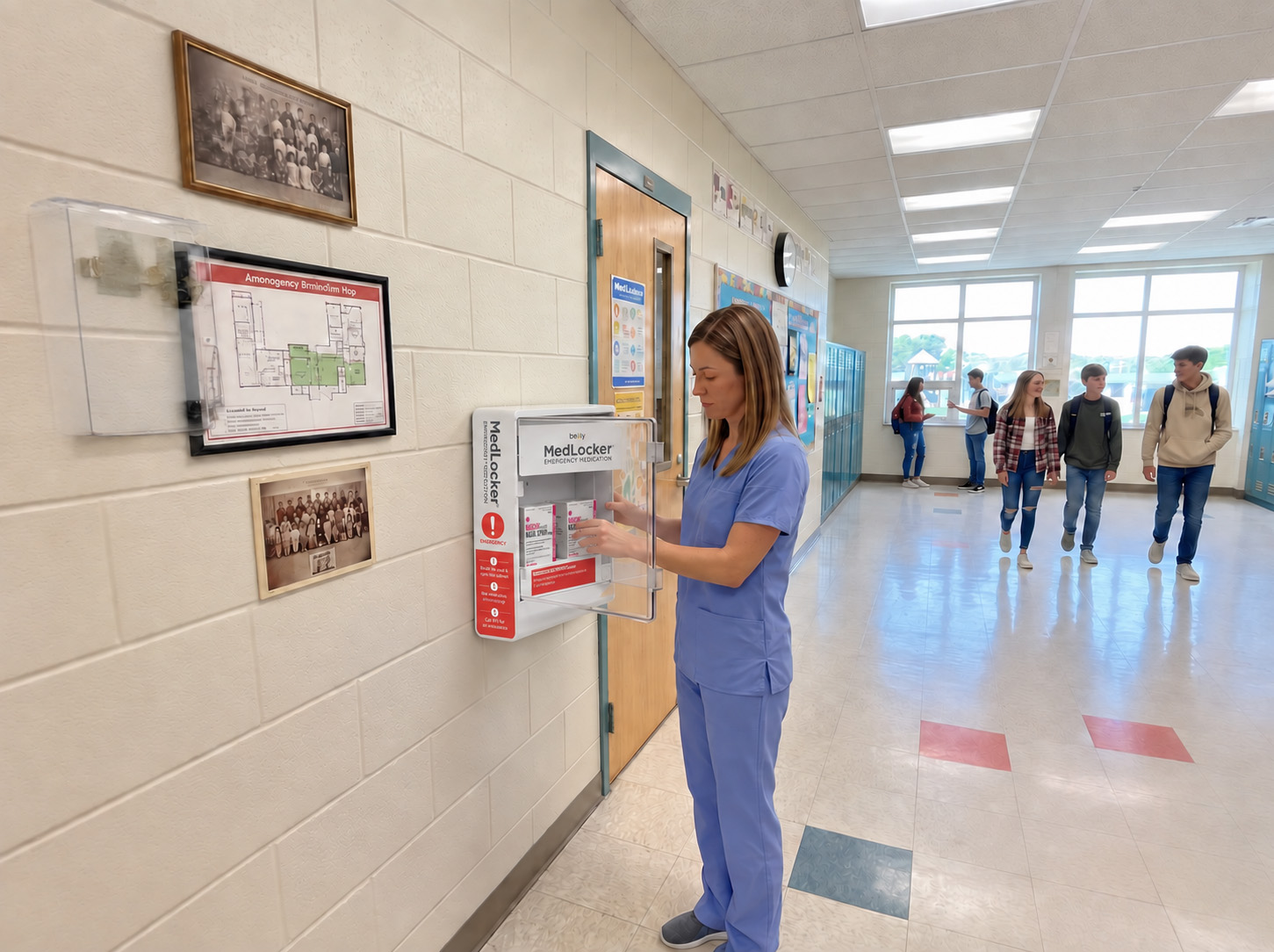
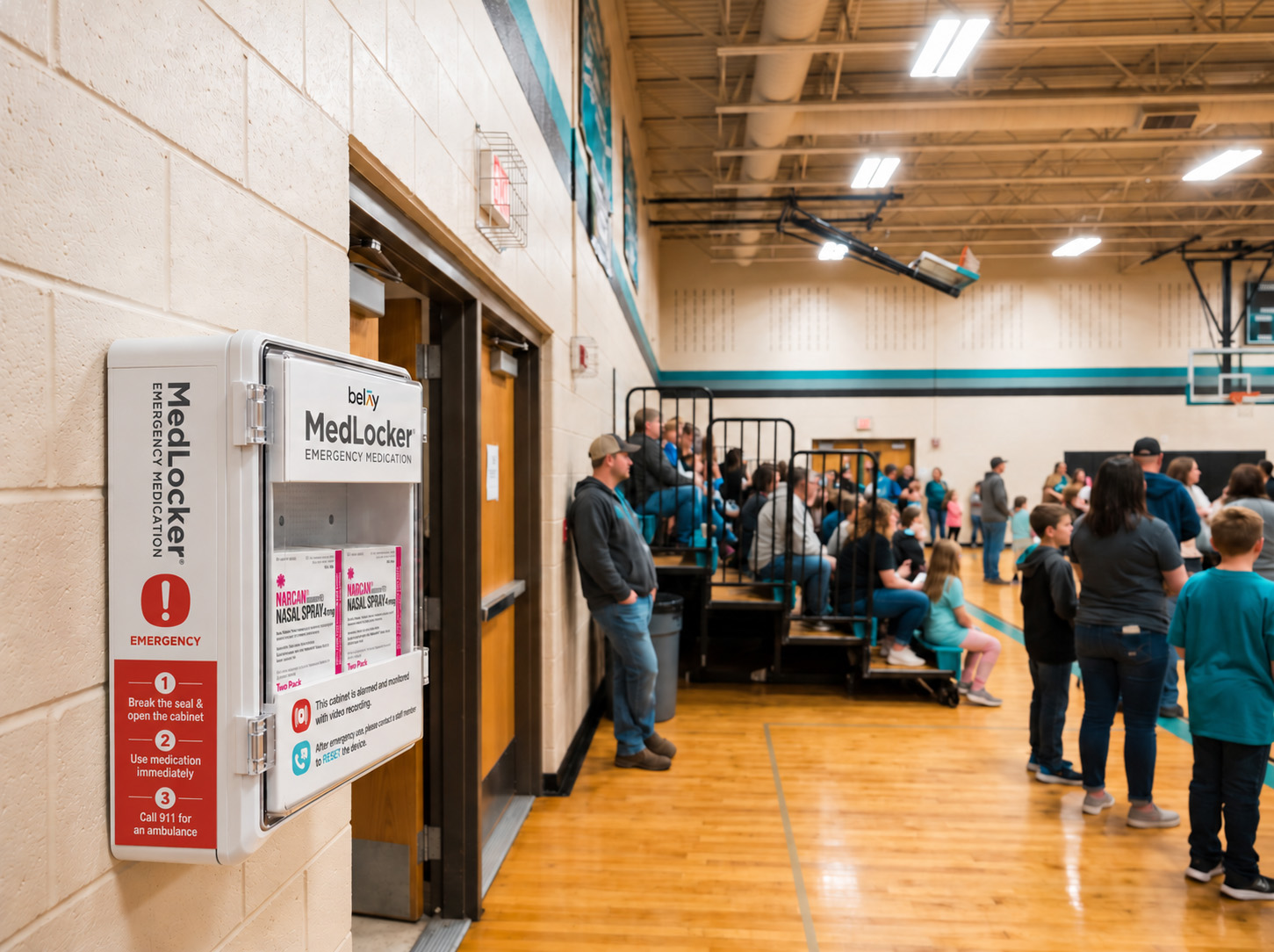
Schools have moved faster than most people realize. Los Angeles Unified, the largest district in the country, began distributing naloxone across all of its schools in 2022.[3] Since then, the shift has moved from voluntary to statutory. Several states now require public high schools to stock opioid overdose medication, and as of January 1, 2026, Illinois requires public libraries to do the same under Public Act 104-0056, with the medication itself available at no cost through the state’s standing order.[8]
Alongside this, the organizations doing the most effective prevention work are the ones led by families who lost someone. Song for Charlie, founded by Ed and Mary Ternan after their son Charlie died from a counterfeit Percocet, built the parent and student education that most schools now use to teach this specific risk, and leads National Fentanyl Awareness Day. Victoria’s Voice, founded by David and Jackie Siegel after the loss of their daughter, established National Naloxone Awareness Day and first published an earlier version of this article in its own newsletter. Their work is why the counterfeit pill risk is understood at all outside of clinical circles.
The Part That Still Falls to You
Education reduces the number of students who take the pill. It does not reduce to zero. For the ones who do, the outcome depends on something much simpler: whether naloxone is within reach of whoever is standing there, and whether that person knows what to do.[6]
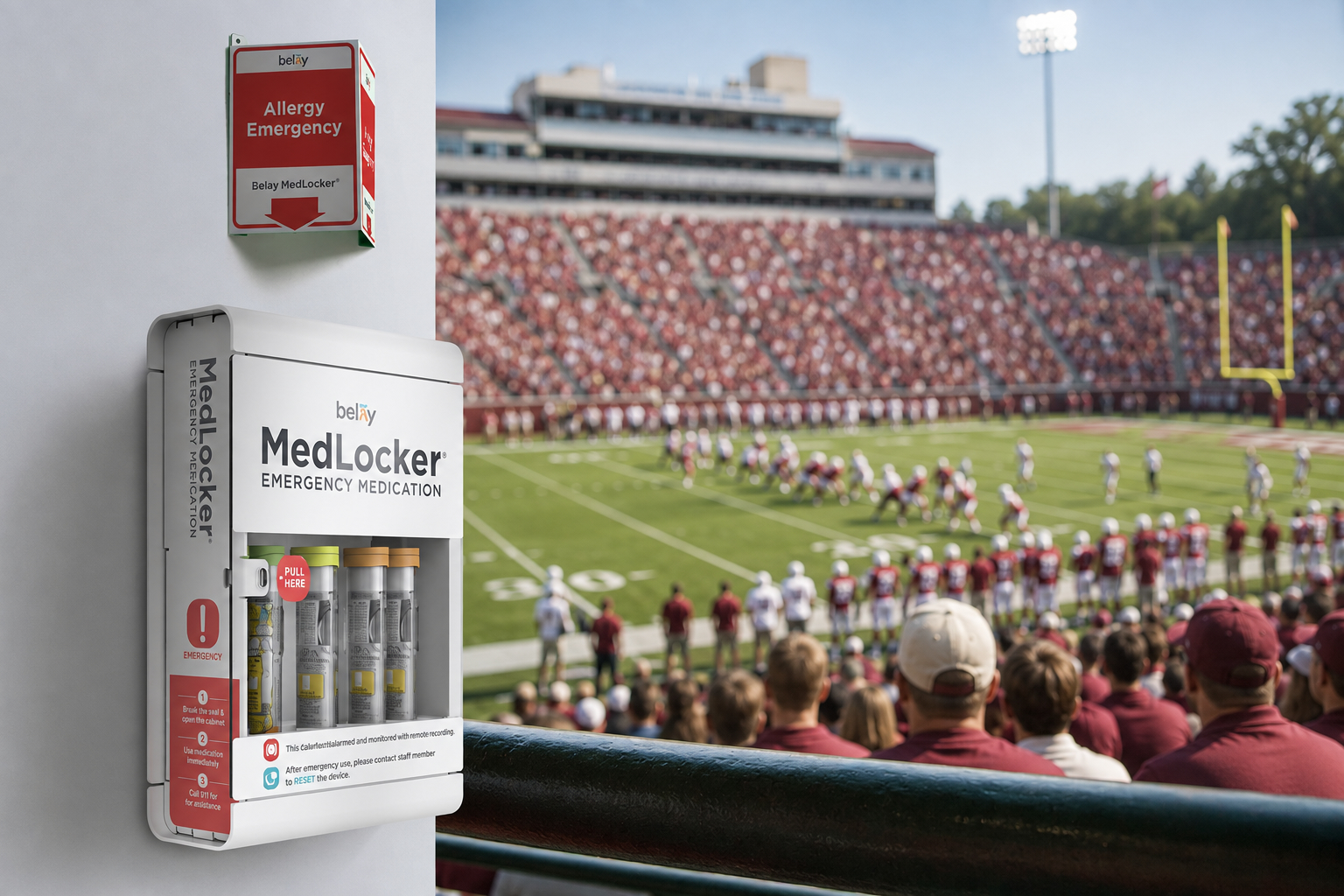
That is a building question, not a medical one, and it is the subject of the rest of this issue. Chris Horan takes up where the naloxone should live, and Eric Freitag takes up what it takes to keep it usable. MedLocker®, our smart station for epinephrine, naloxone, and albuterol, exists because the gap between having the medication and being able to use it turned out to be where most of the risk lives.
Be ready. Be within reach.
References
- Centers for Disease Control and Prevention (CDC). “Drug Overdose Deaths.” CDC.gov. https://www.cdc.gov/drugoverdose/deaths/index.html
- National Institute on Drug Abuse (NIDA). “Overdose Death Rates and Trends Among Youth.” NIDA.nih.gov. https://nida.nih.gov/research-topics/trends-statistics/overdose-death-rates
- Thompson, Dennis. “America’s Teens Are Being Poisoned by Fentanyl.” HealthDay News, 2024.
- Friedman, Joseph. University of California, Los Angeles. Research on counterfeit pills and adolescent overdose mortality.
- The New York Times. “The Deadly Reach of Fentanyl on Social Media.” 15 September 2022. https://www.nytimes.com/interactive/2022/09/15/us/fentanyl-teens-social-media.html
- Hadland, Scott, MD. Chief of Adolescent Medicine, Mass General for Children. On naloxone access in schools.
- KFF. “Teens, Drugs, and Overdose: Contrasting Pre-Pandemic and Current Trends.” https://www.kff.org/mental-health/teens-drugs-and-overdose-contrasting-pre-pandemic-and-current-trends/
- Illinois Department of Public Health. “Public Libraries Across Illinois to Stock, Administer Opioid Overdose Reversal Agents.” December 2025. https://dph.illinois.gov/resource-center/news/2025/december/release-20251209.html