
What the Louisville Slugger Installation Looks Like — and Why It Matters Beyond Illinois
Louisville Slugger Sports Complex in Peoria, Illinois, hosts hundreds of thousands of athletes and visitors each year. Youth tournaments, family competitions, community events — the kind of gatherings where a medical emergency, if it happens, happens in a crowd, often far from a hospital.
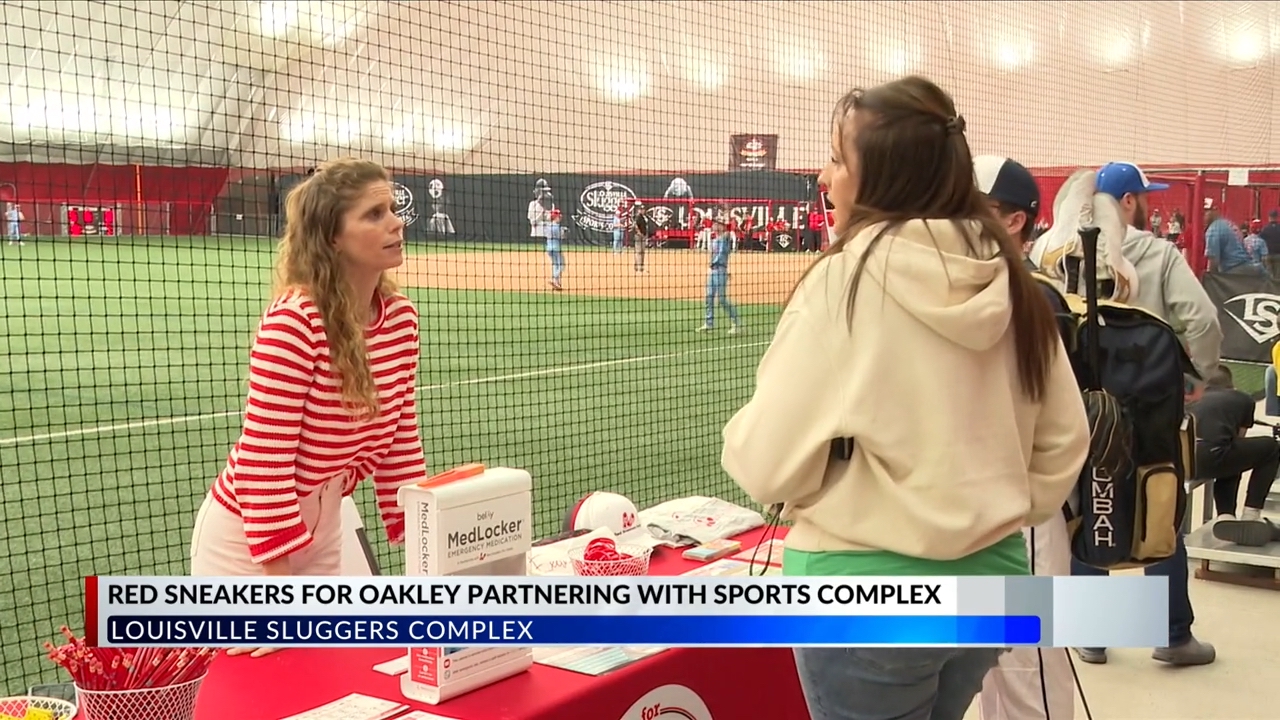
As of this spring, the complex has a comprehensive answer to that reality. Multiple Belay MedLockers are installed across the facility, stocked with both epinephrine and albuterol. A roving go-bag carries redundant emergency medication supplies. Staff have completed formal training to recognize and respond to severe allergic reactions. And a monitoring system activates the moment medication is accessed, alerting the right people immediately.
It is one of the more complete emergency medication setups currently operating in a public sports venue in the United States.
The Community Behind It
This installation did not come from a corporate mandate or a regulatory requirement. It came from Peoria’s own Red Sneakers for Oakley chapter, which has been working for several years to make the city a model for community-level emergency preparedness — pushing epinephrine access into venues, schools, and public spaces across the region as part of a deliberate, ground-up effort.
The Louisville Slugger project was made possible through the Epi Everywhere coalition, which supplied the facility with epinephrine, a Belay MedLocker, and staff training at no cost through its grant program. Red Sneakers Executive Director Lindsey Spangler put it plainly when the installation was covered by WMBD, Peoria’s CBS affiliate: “An anaphylactic reaction can happen within minutes, so having access to epinephrine quickly can truly save a life.”
The Epi Everywhere coalition brings together Red Sneakers for Oakley, Kaleo (makers of Auvi-Q), MenuTrinfo’s AllerTrain, and Belay — each contributing a distinct piece of what a real preparedness system requires. The grant program delivers all four components together, rather than leaving organizations to assemble them independently.
Design as a Safety Decision
One of the less obvious aspects of the Louisville Slugger installation — and one worth paying attention to — is how much attention went into placement and wayfinding.
Emergency medication is only useful if people can get to it quickly under stress. That requires thinking about sightlines, signage scale, foot traffic patterns, and the physical logic of how people actually move through a building when something goes wrong. It is an architectural question as much as a safety one. The work at Louisville Slugger treated it that way, positioning MedLockers where people naturally gather rather than where a cabinet could be technically installed and forgotten.
The response from the venue’s own community reflected what that kind of intentionality communicates to families. When Louisville Slugger shared news of the installation, the engagement was immediate. “People care about this,” the facility’s general manager noted. Parents watching their kids compete at a venue want to know it is prepared. That trust is earned through visible, well-considered action — not through a laminated policy on a back-office wall.
Peoria as a Model
Louisville Slugger is one piece of a broader picture taking shape in Peoria. The Red Sneakers Peoria chapter has been systematically working to bring emergency medication access to establishments across the city, with law enforcement in Peoria and Goodfield now part of the ecosystem as well. Officers are frequently first on scene at medical emergencies, and equipping them to respond to anaphylaxis is a natural extension of the same preparedness logic.
A partnership with Bradley University is also developing, engaging architecture and design students in thinking through emergency medication placement as an applied design problem — with a credential pilot underway that could eventually become a formal academic program in emergency-ready design.
The throughline is consistent: Peoria is not waiting for legislation to set the standard. It is building one.
What This Looks Like for Schools and Universities
The questions the Louisville Slugger installation worked through — where does medication go, who is trained, how does the system stay maintained when staff turn over — are the same questions that school administrators, university facilities teams, and campus safety directors face. The answers are the same too.
Belay’s platform manages the operational layer that makes preparedness durable over time: medication tracking, credential monitoring, compliance documentation, and real-time alerts. The Epi Everywhere grant program provides the pathway to get started.
2027 grant applications are open now. For institutions ready to move from intention to infrastructure, the conversation can begin today.
Chris Horan is a licensed architect and co-founder of Red Sneakers Peoria. Dr. Abby Herzig is co-founder of Belay, the operational platform behind the MedLocker emergency medication ecosystem.
Media coverage of the Louisville Slugger installation: WMBD / Central Illinois Proud